Perhaps this post is best begun inside the proverbial rabbit hole, and climbing out. I was sitting with my regular knitting circle, and one of our friends was sharing pictures, on her phone to another friend, from her knitting trip to Ireland a few years back (circa 2022) and comparing them to today.
I was busy with “frogging” (unknitting) a section of my project after finding a mistake several rows down, but the upside is doing it while listening to a conversation makes it far more bearable. I was not looking up from my project, so I didn’t see the photos on the phone, just heard the narration and comments made.
At one point she mentioned a Irish woolen mill she had visited, and how that now the wool fleece (from the Irish sheep) are sent to England to be cleaned before being returned to Ireland for spinning into yarn and then woven into fabric. “They (the English) probably have better technology so it’s cheaper”. Dear reader, I have tried my hand at scouring fleece, at home, and I can attest it’s not something I would want to do regularly, but I’m glad I did. It gave me insights into wool and its properties, and an appreciation for the work that goes into producing textiles, that I wouldn’t have gained otherwise.
My knitting friend went on to say there used to be someone who inspected the fine Irish wool fabric coming off the looms for any imperfections, but now it was done “by computers”. She said what a boring job that must be in a tone that suggested someone was spared by technology.
Perhaps. It made me think of people who saw me knitting and would ask how much the yarn cost, how long it would take to knit something (oddly, never questioned the value of my time) and would inevitably remark that it was cheaper to buy a knitted garment.
What they didn’t understand was the benefit I derived from knitting, the thrill of creating something, or even just copying it, mastering ever more complex patterns or the comforting aspect of old favorites. The memories of happy time spent with other knitters, relatives, friends, teachers. The history of different patterns that told a story of a time and place, Orenburg lace (from the Russian Volga), Scotch and Norwegian ganseys knit to uniquely identify the wearer and their county of origin, to name a very few. There is a whole lot of knowledge that is transmitted while knitting, especially with others.
As someone keenly interested in how technology is constantly reshaping our humanity, one endeavor at a time, hearing my friend talk about how technology (more than likely, AI) has prevented someone from having a “boring” job made me think about how we have uncritically fallen into a trap of “if technology can do it, it should”. That there is no benefit to doing anything that a machine can do, especially if it’s “boring”.
Like phonics, or multiplication tables, or any of the fundamental skills that children need to learn how to learn. Or then building on those skills to absorb actual knowledge, by memorization and repetition. E.D. Hirsch, in his classic “Cultural Literacy” (1981) foretold a future where we would become incomprehensible to one another, even inside our own country, for a failure to educate our children so as to be able to navigate their world and find their place in it.
In 2026, we are in that world. Words have taken on meanings wholly detached from context or usage. Failure to teach basic skills, (enabling even rudimentary critical thinking), failure to transmit knowledge; the omnipresent, addictive technology of smartphones and social media and the attendant isolation, has created more than one generation of people without moorings in reality, past or present. Or guides to bring them into it.
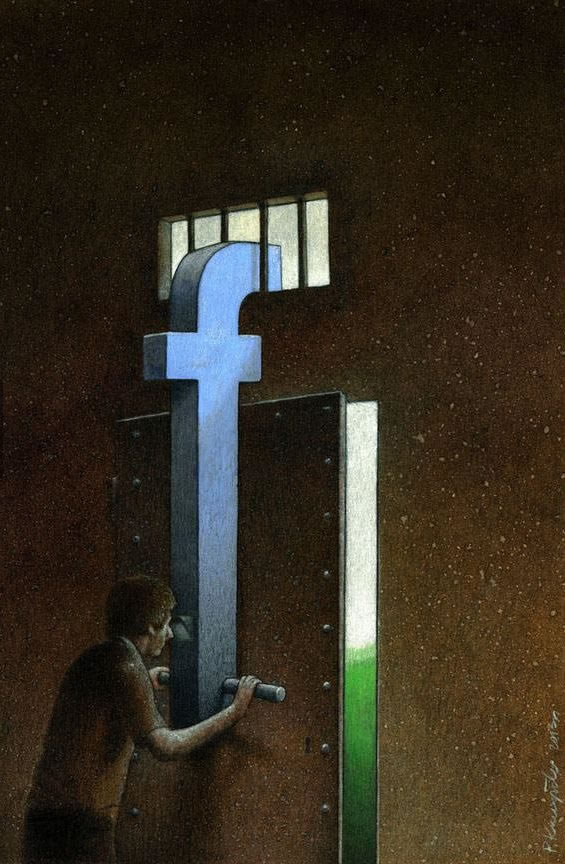
Daily I am confronted with this reality. I ran into a young neighborhood girl (perhaps 16 years old) in our local convenience store. After exchanging friendly greetings, I asked her what she was doing after the local power/internet outage and she expounded in a very animated way about something I can only guess is some sort of online game or multiverse. When I asked her, ‘what is that?’ she started using terms that although I understood the words, I could not figure out their meaning. For a brief moment I even wondered if I was experiencing some sort of sudden aphasia while I listened, sincerely interested, but truly lost as to what to ask that would clarify things.
Which brings me back to the Nebula-award winning book, “The Persistence of Vision” by John Varley (1978). In it’s collection of stories, or novellas, is a story where a narrator comes upon an isolated community where the adults, who had been rendered deaf and blind by the Rubella (German measles) outbreak in 1960, and live in a setting where they have developed a way of communicating with each other that doesn’t involve language but ‘sensing’. In the year 2000 (which is in the future in this story) the narrator comes back and finds those adults have disappeared, but their children are there – and these offspring have deliberately blinded and deafened themselves and use the same means of communicating with each other – and only with each other – as their blind and deaf parents did.
I remember reading this book long ago. In my memory, I conflated it with other science fiction and thought it was written by Ray Bradbury but a quick Google search set me straight on that. While online, I also saw a bunch of reviews – some even titled “Millennial Reviews”, which, without context or experience, completely misread this excellent story. Then I tried searching for reviews actually written around the time the book won the prestigious Nebula award in 1979. In this world of AI, which allegedly has hoovered up all of the works of the world both digital and physical (including buying up the inventories of used bookstores, ripping the spines off the books to scan the pages) – I could only find one contemporaneous review, referenced in Wikipedia, written in 1984, housed on JSTOR (www.jstor.org).
If you hadn’t read the book, if you hadn’t been alive during the time that it was referencing, you have no idea about the context or message. And you probably would have no idea where to look to get that context, if you had the inclination to look at all, realizing that this was a product of a different time. The “Millennial Reviews” see everything through their particular lens – which is natural, to be sure – but not edifying. It is lazy, and even harmful, and wrong. No one even tries to question their understanding of the story, to understand the history and context and why it is important.
Being “forced” to do things that might seem “boring” on the surface actually trained my brain and my mind to recognize patterns, and make connections, and to feel and experience life in the company of fellow saints and travelers. I recognize that some of this comes simply with living, and very much realize that my understanding has sometimes enlarged and shifted since my youth, as my life experience has sometimes shifted my perspective.
I am certainly not advocating against automation, or technology. The incursion of AI and technology into every single aspect of our lives, slowly at first and then rapidly accelerating t brought to mind how we become blind to why we use that advance, and human costs that may not be readily apparent. Can the ‘computery’ in England scouring the Irish wool tell if it’s clean enough to be shipped back to Ireland for spinning? Can its automaton counterpart in Ireland, evaluating the fine Irish woolen, spot all variations in the thickness or pattern or color? Most probably, and at a speed that humans cannot match. When does the fabric become something not made by the Irish but become something machined and processed that could come from anywhere? Will it matter when we have generations who are divorced from every human experience, seeing and hearing and working and learning and understanding?
A public panel discussion at our local (private, nominally Protestant) university, regarding Pope Leo’s encyclical on AI, “Magnifica Humanitas” laid out the case – we need to get back to living, working, learning among other human beings, despite their being different from us. To not isolate and turn in on ourselves with our screens but to reinvigorate the institutions of daily life.
“Humanity—in all its grandeur and woundedness—must never be replaced or surpassed.”


Leave a Reply